
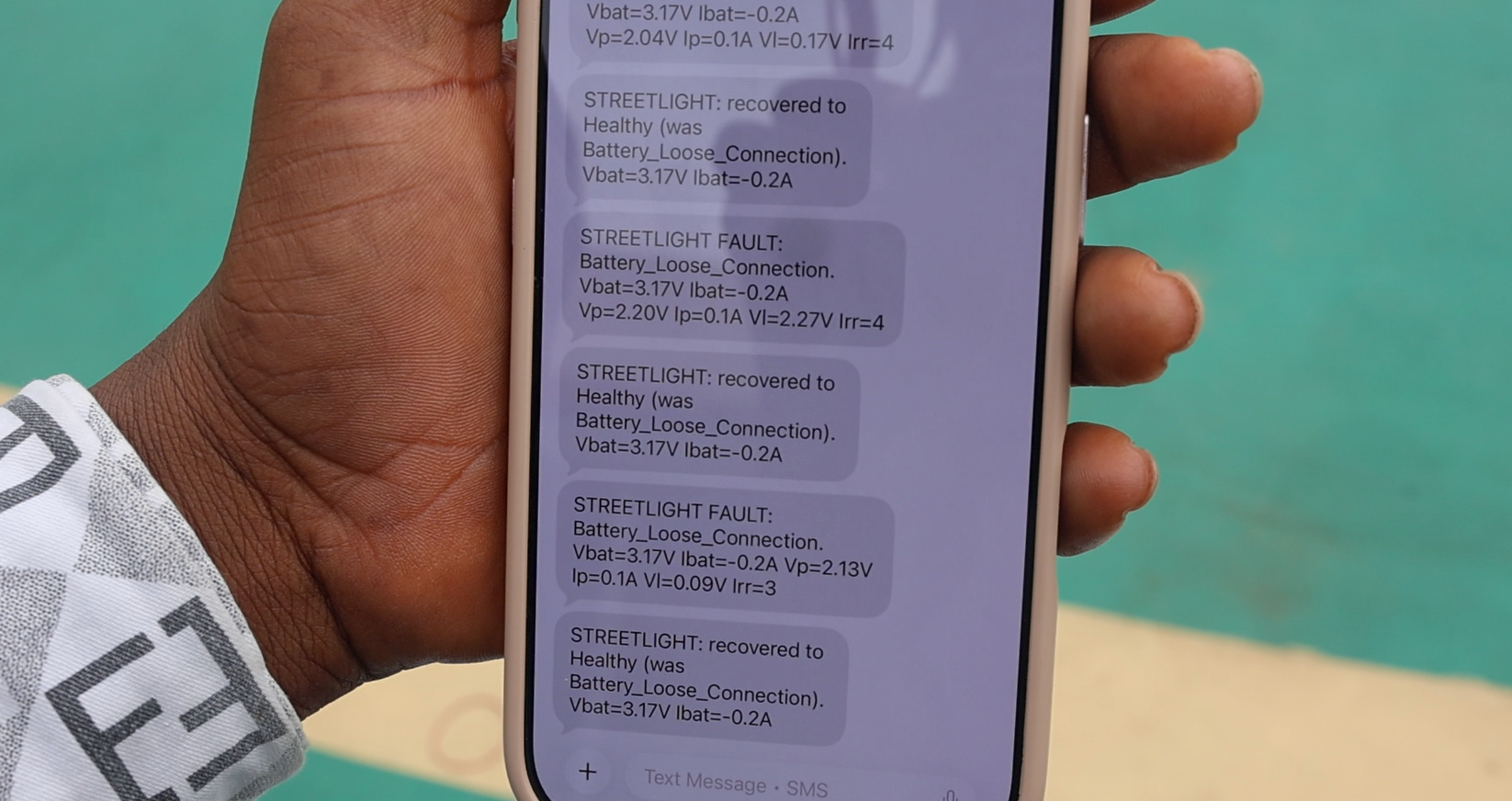
A group of students at the Department of Mechanical Engineering of the Kwame Nkrumah University of Science and Technology, Kumasi (KNUST) has developed a machine learning-based prototype that can detect faults in solar street lights and remotely alert maintenance personnel.
The system is designed to reduce the need for maintenance teams to physically inspect individual street lights to determine whether they are functioning.
The students, Keren Nyarkoa Armah, Terry Oppong, Rosemond Azlafor, David Awinbisa Akunyah, Emmanuel Frimpong Appah, Raphael Quaye and Emmanuel Opoku Boateng, developed the prototype under the supervision of Professor George Yaw Obeng.
According to the team, the idea emerged after observations of solar street lights across the KNUST campus showed that some faulty units could remain unattended for extended periods.
While acknowledging the University's deployment of solar street lights as part of efforts towards sustainability, the students identified fault detection and maintenance response as an area where technology could improve the system.
“We decided to go around campus and look exactly at what faults we can identify in a street light,” a member of the team explained.
The students subsequently developed a prototype that combines a Random Forest machine learning algorithm with GSM communication technology to detect faults and transmit information about affected street lights remotely.
This means that instead of maintenance personnel moving from one street light to another to identify faults, information from the system could be sent directly to an operator.
“If you are in your room or in your office as a maintenance person, and a street light around Brunei is faulty, you should be able to receive that information,” the team explained.
The project, titled “A Machine Learning-Based Prototype Solar Street Lighting System for Fault Detection and Monitoring,” seeks to make the management of solar lighting infrastructure more proactive.
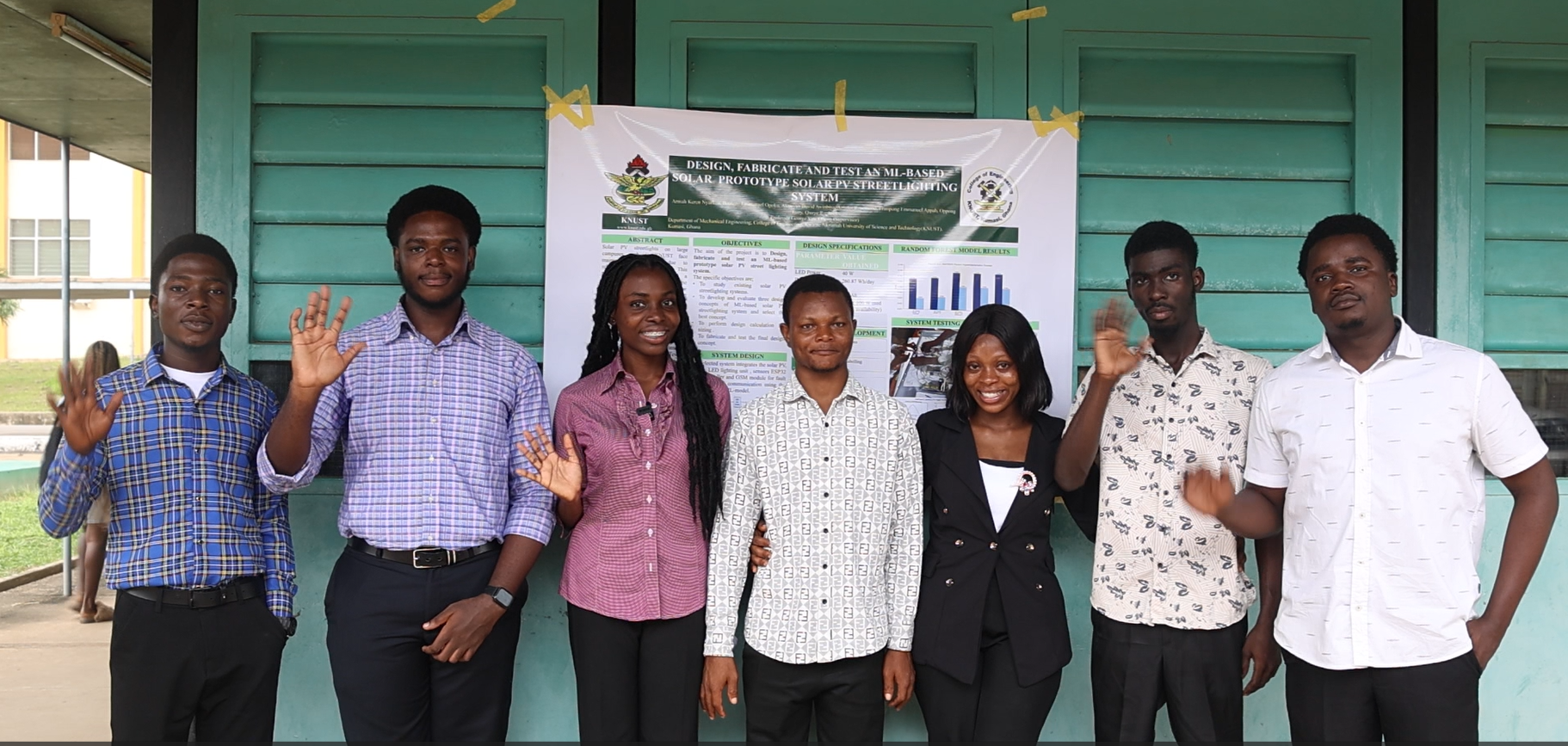
During testing, the students said the prototype successfully demonstrated its ability to monitor the operation of a street light and communicate information for remote monitoring.
The team believes that deploying the technology across multiple solar street lights could create an interconnected monitoring system, allowing maintenance personnel to identify faulty units more quickly and direct attention to locations where repairs are needed.
Such a system could potentially reduce the time spent on routine physical inspections while improving the reliability of outdoor lighting infrastructure.
The students recommended further development and deployment of the prototype to assess its performance at a larger scale.
Story: Emmanuel Kwasi Debrah


